
The Anxiety Isn’t About the Task. It’s About Being Seen

There’s a misunderstanding we often make about anxiety when we try to start again.

We assume the fear is about the task itself, be it writing, exercise, routine, or showing up.

But often, that isn’t where the anxiety lives.

The anxiety sits in visibility.

Stepping back in

When you return to something after a pause, you don’t just step back into the activity. You step back into a space that holds memory, comparison, and expectation.

Gyms remember bodies.
Platforms remember voices.
Communities remember who you were when you last showed up.

Even group chats can feel heavy once you’ve gone quiet.

These are not neutral spaces. They are evaluative spaces. Places where returning to routines can feel like performance, even when no one is actively watching.

This is why anxiety before starting again can feel stronger than expected.

Stopping often happens privately.
Restarting happens in view.

You’re not just asking yourself to act, but are asking yourself to be seen again.

Seen by others.
Seen by yourself.

There’s an important difference between fear of judgment and fear of expectation.

Judgement is the worry that someone might criticise you.
Expectation is the worry that someone might rely on you.

Expectation carries weight.

If you show up once, will you be expected to keep showing up?
If you post again, will people assume consistency?
If you return to exercise, will momentum be required?

Sometimes it isn’t rejection we’re afraid of.
It’s responsibility.

Hand resting on a curtain near a window, suggesting quiet awareness and hesitation
A quiet moment before stepping back into view.

This is where re-entry anxiety becomes a nervous system response.

When your body has learned that visibility costs energy, it will hesitate before stepping back into public or shared spaces. That hesitation can look like procrastination, avoidance, or sudden exhaustion.

It isn’t laziness.
It’s protection.

Your body is asking a quiet question.
Do I have enough capacity to be seen again?

This is why the thought “people might notice” can feel so activating.

Not because being noticed is dangerous, but because being noticed can reopen expectations you did not consciously agree to.

To be consistent.
To be available.
To be okay.

Sometimes, you simply do not have that to give yet.

I didn’t stop because I didn’t care.
I stopped because being seen required more than I had.

That sentence holds more truth for many people navigating re-entry anxiety than we often admit.

If this resonates, it may help to loosen the link between visibility and obligation.

You are allowed to show up briefly.
You are allowed to step back again.
You are allowed to return without resuming your old role.

Returning does not have to mean continuity.

It can mean entering quietly.
Standing near the door.
Letting your nervous system register safety before asking for more.

If anxiety rises when you think about restarting, try asking a different question.

Not “Why am I scared of this?”
But “Who might see me if I do this?”

The answer often reveals where the anxiety is really coming from.

This piece follows an earlier reflection on re-entry anxiety and why restarting can feel harder than stopping. You do not need to read or apply everything at once.

Presence does not need permanence to be real.



Why Restarting Feels Harder Than Stopping

Quiet stone hallway opening into a sunlit courtyard, suggesting pause and renewal

There’s a strange thing no one really prepares you for.

Stopping something like exercise, writing, eating intentionally, or showing up often happens quietly. Life happens. Illness. Grief. Burnout. Survival mode.

But restarting feels loud.

It can feel daunting to walk back into big spaces.
The gym.
The blank page.
The publish button.

Suddenly, anxiety kicks in. Tight chest. Hesitation. That familiar urge to delay, not because you can’t do the thing, but because doing it means being seen again.

For a long time, I thought something was wrong with me.
It wasn’t.

What is re-entry anxiety?

I don’t know if there’s a perfect clinical term for it. I call it re-entry anxiety.

It is what happens when your nervous system has adapted to not doing something, and then you ask it to step back into a space that carries memory, identity, or expectation.

Re-entry anxiety is not about motivation or willpower.
It’s about exposure.

Restarting means facing who you used to be, noticing the gap between then and now, and risking judgment from others, but mostly from yourself.

So your brain does what it’s designed to do.
It protects you by hesitating, overthinking, and convincing you to wait until you feel ready.

Why big spaces feel especially hard

Gyms, platforms, creative spaces, and even social circles can feel heavy when you return to them.

They carry comparison, memory, visibility, and expectation.

When you re-enter, your nervous system reacts as if you’re being assessed. People might notice. People might expect something. You might disappoint yourself.

That’s why the resistance feels physical.

It’s not failure.
It’s your body remembering.

It shows up in more places than we realise

Re-entry anxiety doesn’t only affect productivity.

  • It affects your ability to reply to messages you left too long ago.
  • Publishing after silence.
  • Returning to church, community, or routine.
  • Restarting care for your body after illness.
  • Even letting yourself feel joy again.

Sometimes we don’t avoid because we don’t care.

We avoid because we care deeply.

The mistake we make when trying to restart

We often try to restart at the same level we left off.

The same intensity.
The same expectations.
The same version of ourselves.

That’s overwhelming.

Your nervous system doesn’t need a full comeback.
It needs safe contact.

A gentler way back

Open lined notebook with three pens resting across the pages
A blank page can feel heavier than a full stop.

Instead of asking, “How do I start again properly?”
Try asking, “How can I touch this without committing?”

One sentence instead of a full post.
One walk instead of a full workout.
One nourishing choice instead of a perfect plan.

This isn’t quitting.
This is re-entry.

And re-entry is meant to be slow.

A final reminder

If restarting feels hard, it doesn’t mean you’re weak.
It means something mattered.
It means you’re human.

You don’t need to become who you were before.
You’re allowed to return as who you are now.

This reflection connects with other pieces I’ve written on slowing down, burnout, and listening to the body.

Anxiety often shows up before action, not because something is wrong, but because the nervous system is trying to protect us (Mind has a clear explanation of how anxiety works).
https://www.psychologytoday.com/gb/basics/anxiety

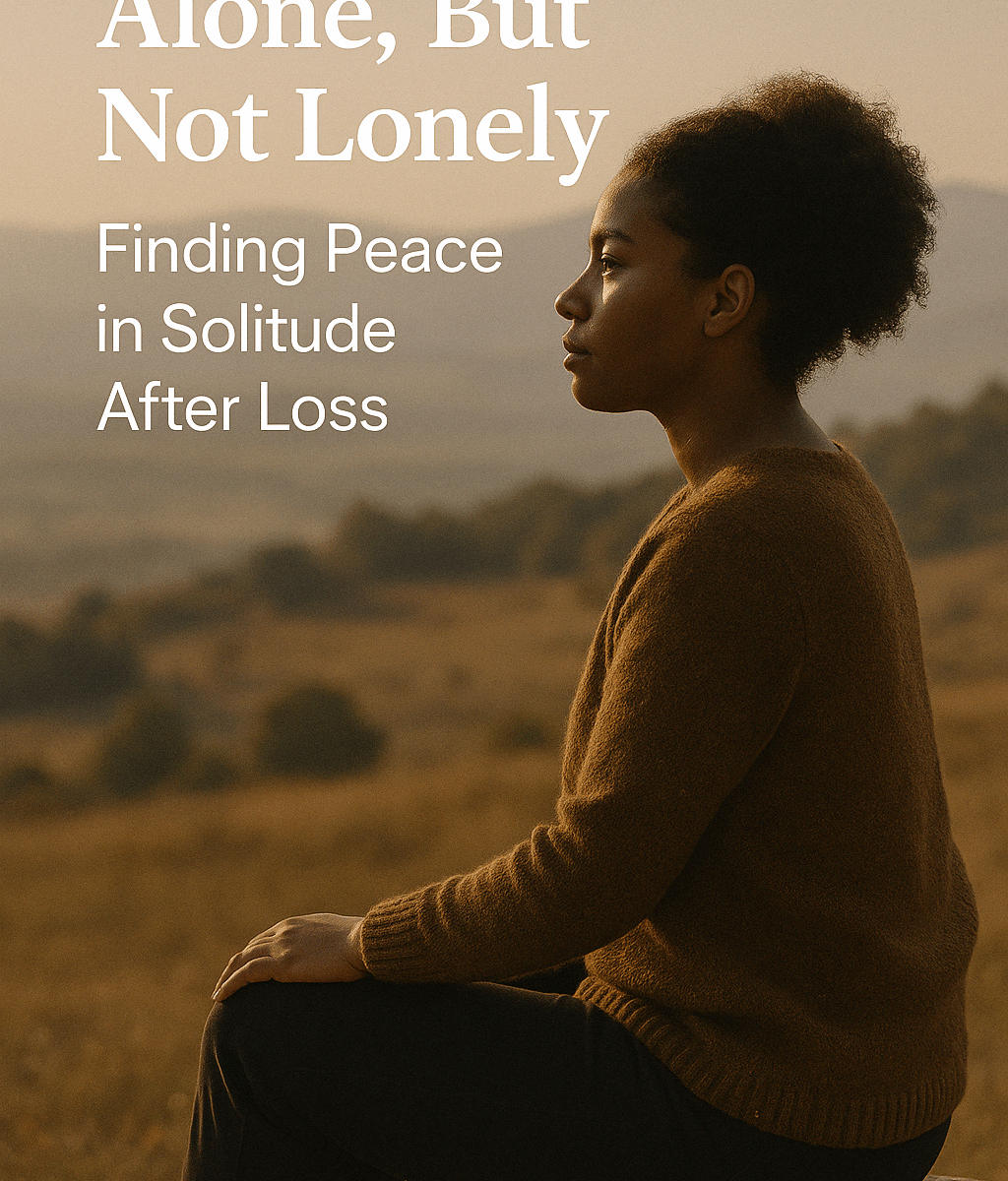
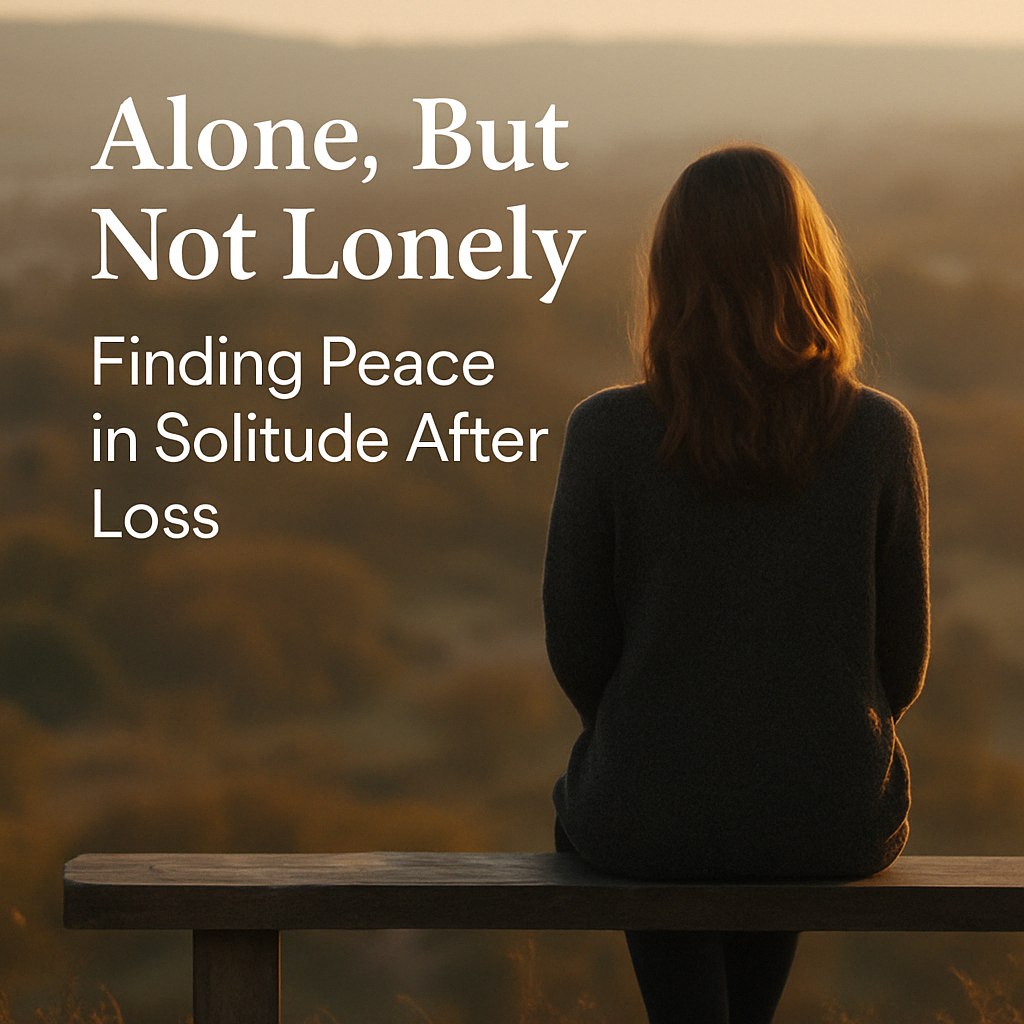
Alone, But Not Lonely: Peace In Solitude

There’s a profound difference between being alone and feeling lonely. For much of my life, I didn’t understand that distinction. Alone often felt synonymous with loneliness. It conjured up images of empty rooms, quiet nights, and a hollow ache deep within—the kind that whispers, “You’re missing something… or someone.”

My journey to this understanding began during one of the hardest periods of my life. Almost five years ago, during the COVID-19 lockdown, I became a widow. Losing my partner in such an isolating time was devastating. The last few years have been hard, and for two and a half years, I was lost in a fog of depression. I didn’t know whether I was coming or going, and each day felt heavier than the last.

But lately, I’ve been finding myself again. Slowly, and with great effort, I began looking after myself. I focused on my mental health, started exercising, eating well, sleeping better, and even joined a gym. At first, it was hard—hard. I felt so alone. The silence in my home was deafening, and the emptiness felt like it might swallow me whole. Yet, through this, I discovered that being alone didn’t have to mean being lonely.

The Loneliness Myth

Society often equates being alone with sadness or failure. We’re bombarded with images of togetherness—perfect families, loving partners, and friend groups that look like they’ve walked out of a sitcom. While companionship is beautiful and essential, this constant messaging can make us feel “less than” if we’re not surrounded by people all the time.

However, I’ve come to see that loneliness isn’t about the absence of others. It’s about the absence of connection with yourself, with purpose, or with the world around you. I’ve felt the loneliest in crowded rooms where I didn’t feel seen or understood. And I’ve felt profoundly content sitting alone in a park, with nothing but the sound of rustling leaves for company.

Finding Comfort in Solitude

Learning to enjoy my own company was not an overnight transformation. It took deliberate effort and a willingness to sit with discomfort. Here are some practices that helped me:

Redefine Alone Time

Instead of viewing alone time as an indicator of what’s missing, I reframed it as an opportunity to discover what I already have. Whether it’s reading a book, journaling, or simply sipping tea in silence, I started treating these moments as gifts.

Get Curious About Yourself

When was the last time you asked yourself what truly makes you happy? What excites you? I began exploring hobbies and interests I’d long forgotten. Learning how to sew, trying new recipes, and being intentional about waking early and exercising helped me reconnect with the parts of myself I’d neglected.

Practice Gratitude

It’s easy to focus on what we don’t have, especially when we’re feeling isolated. I started keeping a gratitude journal, jotting down small joys, including a sunny day, a kind word from a stranger, and the comfort of my heated blanket. Over time, this practice shifted my perspective.

Embrace Nature

There’s something incredibly healing about being in nature. Whether it’s a walk in the woods or simply sitting by a window and watching the clouds, nature has a way of reminding us that we’re part of something much larger.

The Power of Connection—On Your Terms

Being alone doesn’t mean shutting yourself off from the world. It means choosing connection intentionally. I’ve learned to nurture relationships that feel nourishing and let go of those that drain me. And while I cherish my solitude, I also value the deep, meaningful conversations I have with friends who truly understand me.

Loneliness can sneak in, even when we’ve cultivated a rich inner world. On those days, I remind myself it’s okay to reach out. Whether it’s calling a friend, joining a community group, or even talking to a therapist, seeking connection isn’t a sign of weakness—it’s a testament to our humanity.

Finding Freedom in Solitude

One of the unexpected blessings of this journey has been discovering the freedom that comes with being alone. I’ve learned to embrace a life where my time is entirely my own. I can wake up early to watch the sunrise, I can have a lie in without guilt or stay up late writing in my journal without worrying about anyone else’s schedule. I’ve traveled to places I’ve always wanted to see, allowing myself the joy of exploring on my terms.

This independence has given me a deeper appreciation for life and myself. It’s taught me resilience, self-sufficiency, and the ability to find joy in small, quiet moments. For the first time in a long time, I feel at home within myself.

Alone, But Not Lonely

Now, when I find myself alone, I no longer feel the pang of inadequacy that used to accompany it. I’ve discovered that solitude can be a space for healing, growth, and self-discovery. It’s where I’ve learned to listen to my own needs, honor my feelings, and dream freely.

If you’re struggling with loneliness, I want you to know this: You are enough, just as you are. Learning to enjoy your own company is a journey, and it’s okay to take it one step at a time. For me, the loneliness is okay. I’ve learned to live with it. I can do what I want, on my own time, and I’ve found a quiet contentment in that. You’re not missing; you’re becoming. And in that becoming, you’ll find that you can be alone, but never truly lonely.

Mind UK provides tips on managing loneliness and improving mental well-being.

Speak Up: How to Advocate for Yourself

Have you ever hesitated to speak your mind in a meeting, ask for a raise you deserve, or set boundaries in a relationship?
You’re not alone. For many women, speaking up for oneself may feel challenging. However, it is a vital tool for shaping one’s life, career, and relationships.

Advocating for yourself isn’t just about being assertive — it’s about valuing your worth and ensuring your voice is heard.
In this post, we’ll explore practical strategies, how to overcome common barriers, and why self-advocacy is essential for growth.

Why Self-Advocacy Matters

Self-advocacy is the foundation of empowerment. Each time you speak up for yourself, you take charge of your story and make sure your needs and goals are seen and heard.
Here’s why it’s critical:

  • It Builds Confidence
    Speaking up reinforces your sense of self-worth. The more you do it, the stronger your belief in your capabilities becomes.

  • It Challenges Gender Bias
    Advocating for yourself disrupts biases and sets an example for others. In doing so, it creates space for more inclusive environments.

  • It Leads to Personal Growth
    Whether it’s negotiating a salary, setting boundaries, or pursuing a dream, self-advocacy pushes you out of your comfort zone. As a result, it helps you grow.

Common Barriers to Self-Advocacy

Understanding the challenges is the first step to overcoming them:

  • Fear of Rejection or Conflict
    Many women avoid advocating for themselves out of fear of pushback. This fear, though valid, can limit personal and professional growth.

  • Cultural Expectations
    Women are often socialised to be accommodating, making it harder to prioritize their own needs. Consequently, self-advocacy may feel unnatural.

  • Impostor Syndrome
    Doubts about qualifications or worth can make self-advocacy difficult. Even so, it’s important to challenge these thoughts.

  • Lack of Support
    Without a network of allies, advocating for yourself can feel isolating. Therefore, building a supportive community is key.

Strategies to Advocate for Yourself

  1. Know Your Worth
    Reflect on your skills, achievements, and contributions. Write them down and review them regularly.
    In addition, practice self-affirmation: remind yourself that your voice and needs matter.

  2. Be Clear and Direct
    Use concise language. Avoid overexplaining or apologizing unnecessarily.
    For example, instead of saying, “I think I might deserve a raise,” say, “Based on my contributions, I’d like to discuss a salary adjustment.”

  3. Practice Assertive Communication
    Use “I” statements to express your needs without sounding accusatory.
    For instance, “I feel undervalued when my ideas are dismissed, and I’d appreciate an opportunity to share my perspective.”

  4. Prepare and Rehearse
    For high-stakes situations, such as salary negotiations, prepare in advance.
    Moreover, role-play with a trusted friend or mentor can help build confidence.

  5. Set Boundaries
    Learn to say no without guilt. Every time you say yes to something draining, you’re saying no to something energizing.
    Remember, boundaries are a form of self-respect.

  6. Seek Support
    Surround yourself with mentors, allies, and peers who provide guidance and encouragement.
    Additionally, join communities of like-minded women who understand your challenges.

  7. Embrace Small Wins
    Self-advocacy grows with practice. Start small by speaking up in low-pressure situations and gradually tackle bigger challenges.
    Over time, your confidence will grow.

Inspiration: Stories of Women Advocating for Themselves

  • Sara’s Story: Owning Her Value
    Sara, a marketing manager, discovered her male peers earned significantly more despite similar roles.
    After gathering industry salary data and documenting her achievements, she approached her manager with a case. She secured a raise and gained respect for her initiative.

  • Anele’s Story: Setting Boundaries
    Anele, a mother and entrepreneur, overcommitted to client demands at the expense of her mental health.
    Eventually, she started setting firm but polite boundaries, improving her well-being and earning clients’ admiration for her professionalism.

Advocating for yourself isn’t selfish, it’s essential. Each time you speak up, you’re not just empowering yourself but paving the way for others to do the same.

Your voice matters. Your needs matter. You have every right to take up space in any room you walk into.

For more practical tips on building assertiveness, check out this helpful guide by Mind UK.

Start today. Whether it’s asking for help, stating your opinion, or taking credit for your work, take that first step toward standing tall and owning your worth.
You are your own strongest advocate, and the world is waiting to hear what you have to say.

Starting Fresh: Writing After a Challenging Year

It’s been a while since I’ve written anything here and if you’ve been following this blog, you may have noticed the silence.

If you’re new here, welcome, I hope my words will resonate with you in some way.

This past year has been one of the most challenging periods of my life. As someone who writes about mental health, I’ve always tried to create a space for honesty and vulnerability. But when my mental health took a hit, I found myself unable to translate my feelings into words.

Writer’s block is often romanticised as a creative hurdle to overcome, but for me, it felt like a wall I couldn’t climb. A mix of fatigue, self-doubt, and simply not being well left me feeling stuck, I questioned whether my voice still mattered and whether my story was worth sharing.

But here’s the thing I’ve realized: silence can be its own story. It’s a space where we pause, reflect, and hopefully heal.

While I can’t say I have all the answers or that I’ve completely “bounced back,” I do know this: taking the first step, no matter how small, is worth celebrating.

So, here I am, breaking the silence. This post may not be perfect, but it’s a start. I want to use this moment to remind anyone else struggling with their mental health or creative endeavors that it’s okay to pause. It’s okay to rest and when you’re ready, it’s okay to begin again, even if that beginning feels fragile.

In the coming weeks, I hope to share more about what this year has taught me, the tools I’ve leaned on, and how I’m working to rebuild my confidence. But for now, I just want to say thank you—for being here, for your patience, and for reminding me that I’m not alone.

Here’s to taking small steps and finding strength in vulnerability.

Zandi

Mental Health Poem

Mental health is not a choice
It does not care about your voice
Your age, your gender, your race, your faith,
It can affect you in any state

Mental health is not a flaw
It does not follow any law
It can be hidden or be seen
It can be mild or extreme

Mental health is not a shame
It does not deserve any blame
It can be treated with support
It can be healed with love and care

You Don’t Look Depressed

There have been numerous times when I have heard this statement, you don’t look depressed or you don’t look like you struggle with anxiety or mental health problems; but what do depression and anxiety look like?

The general expectation of someone struggling with their mental health is that they would be always sad, angry, or crying but there is more than one look to mental health.

While some people may show that they are anxious or depressed, there is a greater percentage of people who are good at masking how they feel.

Here are some Reasons for hiding one’s mental health

  • Fear of experiencing negative responses to sharing about their mental health.

There is a lot of stigma surrounding mental health, especially in ethnic minorities. For one thing,  one may feel like it is a weakness to let people know that they have been diagnosed with depression and anxiety and that they may be receiving treatment for it.

  • Not wanting to be a burden to loved ones or colleagues.

If one bears a responsibility to family or is in a senior position at work, they may not want their children or peers to know that they are struggling.

  • Feeling embarrassed to talk about what they are going through.

A lot of people that hide their mental health struggles are usually those who are strong for everyone.

They are the ones that always tell you to reach out to them when you need anything, so when they hit a rough patch, they are reluctant to disclose their feelings.

  • Feeling like they are being judged for being weak.

Some people feel that accepting you have a mental illness and taking medication for it may be perceived as a weakness.


While some people may show that they are going through stuff, there is a greater percentage of people who are good at masking how they feel.

What should we do then when someone shares that they have mental health problems? 

  • Listen to them without prejudice.
  • Ask them questions to show that you care.
  • Let them know you are there and ask how you can be of help.
  • Be patient and do not rush to give to voice your opinion.
  • Give them an opportunity to talk.
  • Try not to overwhelm them by giving too much advice.
  • Do not downplay their symptoms. It takes a lot for someone to trust you enough with that kind of information about themselves.
  • Give them space to process their feelings if they ask for it.
  • Encourage them to continue with their treatment as well as therapies if they have been prescribed them.

Help is available for all types of mental health problems, so no one should go through it alone. Mental health services are free on the NHS  (UK).

https://www.nhs.uk/nhs-services/mental-health-services/

https://www.nhs.uk/mental-health/social-care-and-your-rights/how-to-access-mental-health-services

Photo cred: pexels-mwabonje-1820919.jpg

Image by Robert Ruggiero from Pixabay

How To Cope With Loneliness

We all experiences loneliness from time to time, yet each person’s experience will be different. One way to describe loneliness is the feeling that we get when our needs for social contact aren’t satisfied.

There are people who choose to live alone and  be happy without much social contact with others; others might find this a lonely encounter. On the other hand, you might have lots of social contacts, or be in a relationship or part of a family and still feel lonely. It is especially difficult if you do not feel cared for or understood by those around you.


We all experience loneliness from time to time, it can be probematic if it develops into chronic loneliness.


Different Types of Loneliness

Emotional loneliness

This is when you experience bereavement, a relationship breakup, or someone you were very close with is no longer there. This could be a parent, partner, child, sibling, or close friend.

Social loneliness

Social loneliness can come about when you retire or change jobs, move to a new area or country and you feel like you’re lacking a wider social network of friends or colleagues.​​

Transient loneliness

This is when you experience a temporary change in circumstances, environment, or relationships. For example, if you are divorced and are co-parenting and the children must spend time with the other parent, you will feel lonely when the children are away for a weekend or holiday, and if you must self-isolate due to having symptoms or have Covid 19.

  • Situational loneliness– can occur because of short-term or permanent circumstances such as,

– race

– disabilities

– mental health

– gender

– sexual orientation

– divorce

– relocation

It is also common to struggle with situational loneliness on days or times when most people are with their families, for instance, birthdays, bank holidays, Sundays, and Christmases.

Chronic loneliness

Similar to transient loneliness, chronic loneliness can begin during an adjustment in a person’s state of affairs or environment, but it lingers on, and you feel lonely all or most of the time.

Mental Health Loneliness

Loneliness can ensue because of short-term or permanent struggles with mental health disorders and conditions such as PTSD, dementia, and bipolar disorder, to name a few.

How to cope with loneliness

Spend time with others by getting involved in activities within the community or consider volunteering.


There are some helpful things one person can do if they find themselves consumed with loneliness.

  • Evaluate why you might be lonely so that you may try to find the root of the problem.
  • Identify the outcome loneliness is having on your quality of life.
  • Recognize that loneliness is an indication that something needs to change for the better.
  • Contact a therapist or someone that can be trusted to have your best interests at heart.
  • Take time to nurture relationships with others in ways you’re comfortable with. It could be meeting face to face or online.
  • Find something that you enjoy doing and keep yourself occupied, it could be getting a pet if you have the time and means to do so or joining a gym.
  • Spend time with others by getting involved in activities within the community or consider volunteering.
  • Find a support group that meets your needs depending on your circumstances, if you’re struggling with situational loneliness, e.g., health-related, grief, or divorce.
  • Keep in mind that loneliness is not a reflection of you as an individual and that everybody deserves the best in life and that includes the connections that they have.

When to get help

There is help if loneliness is impacting your mental health. You can call a crisis helpline, reach out to a loved one, or call your local emergency room.

Loneliness can be problematic if it develops into chronic loneliness. If you continue having those feelings of loneliness, you may benefit from contacting a healthcare provider or mental health professional.

It would also be good to talk to someone if:

  • feelings of loneliness negatively affect your daily life or make it hard to do the things you want to do
  • you have a low mood or feelings of depression
  • you have symptoms of another mental health concern, such as anxiety or depression
  • physical health symptoms don’t go away after a few weeks, get worse, or affect your daily life

ARE YOU HAVING THOUGHTS OF SUICIDE?

It’s best to get help right away. You can call a crisis helpline, reach out to a loved one, or call your local emergency room. Below is a list of helpful numbers.

https://www.beyondtheshade.com/2021/03/04/depression-contact-list/


Sources:

https://www.mind.org.uk/information-support/tips-for-everyday-living/loneliness/about-loneliness/

https://www.mind.org.uk/information-support/tips-for-everyday-living/loneliness/about-loneliness/

https://www.marmaladetrust.org/lonelinessguide?

https://www.rootsofloneliness.com/

https://www.healthline.com/health/mental-health/chronic-loneliness

https://www.pexels.com/

You Can Always Start Again

It’s the first day of 2022, Happy New  Year everybody!

2021 was not a good year for me, physically, emotionally, mentally, and financially. After losing more close family during the year, my grief was so intense, I lost interest in the things that I loved and that kept me going.

I don’t remember the number of times that I sat down to write but couldn’t put the words together, or went shopping with the intention of cooking but ended up with a fridge full of food that is nearing or past its best before date, but end up opting for a takeaway instead.


I have spent so many months trying to fix things, overthinking a lot of stuff, and kicking myself for the things that I feel I could have done better, which didn’t do much to help with my mental health.

As always, I have a tendency of being really hard on myself, and as we were approaching the year, I spent some time in quiet reflection and decided that I was not going to be listing out any unrealistic new year’s resolutions but that I would start by being kind to myself and not commit myself to timelines which make me anxious when left incomplete.

Set realistic resolutions, don’t overwhelm yourself.

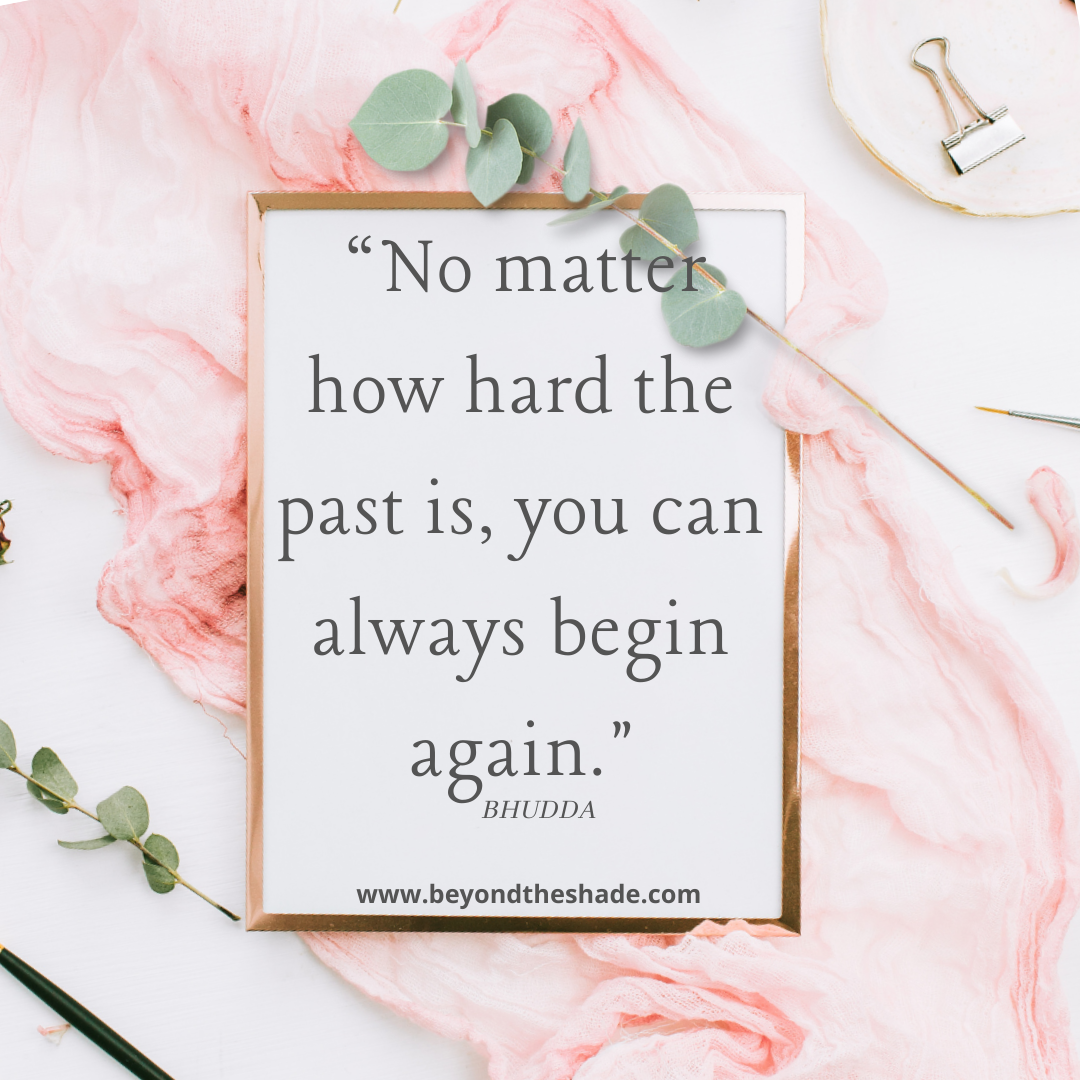
From time to time, I enjoy reading quotes and get a lot of inspiration from the ones that seem to relate to me depending on how I am feeling at the moment so when I saw this one “No matter how hard the past, you can always begin again.” – Buddha

For me, the past does not date back to years, it can be a week or a couple of days but it can set me back for months on end. My hope is to try to conquer each day that I wake and focus on the small victories which would be in the way of:

  • prioritising a shower, and tidying up personal space before undertaking any daily tasks.
  • folding the laundry and putting it away instead of leaving it in the basket until it creases.
  • checking and responding to emails, and emptying the junk mail so that I won’t have 10 000 of them to clear.
  • making sure that bills are paid before they start piling up.
  • reading something and writing even a few lines so that I won’t get out of sync
  • have small manageable to-do lists of tasks for each day
  • learn to identify and avoid my triggers to depression and seek support.
  • celebrating small wins, which includes being kind to myself if I don’t manage to tick all the boxes, knowing that I have a chance to start over the next day.

With the emerging coronavirus variants, it is still very important that we continue wearing our masks, avoiding crowds, maintaining social distancing, and isolating when we are feeling under the weather, have symptoms, or have tested positive.

Stay safe and have a fruitful, healthy 2022, and remember that no matter how hard the past is, you can always begin again.


8 Tips To Boost Your Mental Well-being

Your present way of life may not be helpful in keeping up your mental wellness. Generally, people are always rushing about, stressing about work and children and don’t leave much time for relaxation. Being active and doing things that boost psychological wellness can be an amazing method to advance the nature of your everyday life.

Apply these tips consistently:

Stay in touch with others.

Having solid and positive interactions with others has a significant impact on mental wellbeing. You will be less lonely when you communicate with other people.

Of late, it has been difficult to meet up with friends and families due to the lockdowns brought about by the Covid 19 pandemic, but you can make use of video calls phone calls.

Keep fit

The more unfit we are, the more our mental health suffers so it’s important to maintain our physical health so that our mental health improves.

With local gyms and recreational centres closed during the lockdown, coming out for a walk each day or every other day and getting some fresh air could be beneficial for mental health.

Consistently challenge yourself.

Try something new like cooking a dish you have never made, bake a cake, or simply declutter that drawer with plastic bags and takeaway menus that you have been meaning to throw out for several months. Set small goals and try to stick with them

Figure out how to manage pressure successfully.

Sometimes we do things that we think make us feel better but in essence, they make our situation worse. For instance, if you are a comfort eater, ordering a takeaway or digging into a tub of ice cream will leave you feeling worse off in the long term financially, and also when you gain weight you will not feel good about yourself.

Instead, it would help to try exercises like yoga and Pilates, meditate, chat to a mate or read.

Make time to help those in need

When you help other people and they are happy, you also feel good. It is also a way to keep in touch with other people.

You can volunteer to pick up groceries and prescriptions for vulnerable people and senior citizens during this lockdown.

Practice methods to calm your mind and get a good nights sleep

Because our minds are continually anxious; thinking, anticipating, and recollecting even when we don’t think that they are, we need to figure out how to control them.

Reflection, meditation, prayer, and mindfulness can help with figuring out how to calm down your brain. It might take a couple of attempts in light of the fact that our brains continue to stray and don’t have any desire to be calm but with daily practice, it can be achieved.

Normalise asking for help

 When you bruise your shin, you reach for plaster, when you break your arm you go to the hospital and when you are feeling physically sick it’s easy to ask for help but when one struggles with their mental health it’s not so easy to reach out for help.

Asking for help is hard and might take a lot out of you but it is not a weakness. You can speak to a trusted family member, church member, teacher or call NHS 111 and Samaritans 116 123.

Keep a diary.

Keeping a diary is a good way to not only record your feelings and thoughts but can improve your ability to think critically. You could record events of your day, plan ahead for future events and journal your feelings.

When you have a diary and keep a to-do list, it helps alleviate procrastination and you can tick off the tasks as you go along and not forget what you wanted to do on a particular day.

It is also a good way to record your feelings, on good days you can write about how you feel and what made you feel good and on bad days write about what upset you or made your day not as expected.

Mental and physical health is essential to everyone’s well-being. When we are unwell for long periods of time it starts to affect our ability to be good parents, partners, friends, or employees. These tips are good guidelines on how we can manage our day-to-day lives but when you consistently feel low it is best to see your GP or contact some mental health helplines for more information on where to get help.


https://www.nhs.uk/mental-health/advice-for-life-situations-and-events/where-to-get-urgent-help-for-mental-health/

https://www.samaritans.org/how-we-can-help/contact-samaritan/